Enterprise communications have changed dramatically over the last few years. Microsoft Teams has become a core collaboration platform for organisations around the world, yet the telephony sitting behind it can still be surprisingly complicated.
Multiple carriers, different PBXs in different countries, local contracts, separate SBCs, legacy contact centre platforms, different support providers, different billing models. Individually, each decision may have made sense. Collectively, they can create an increasingly fragmented global voice environment that is difficult to manage, expensive to operate and even harder to evolve.
For organisations looking at Microsoft Teams Phone, the opportunity is therefore much bigger than simply replacing a PBX. It is an opportunity to rethink how enterprise voice is delivered.
Why do global telephony environments become so complicated?
Most organisations never intentionally design a complex communications estate, it develops over time. Businesses expand into new countries, acquire companies, introduce new technologies and work with different carriers and partners. One region might operate an Avaya platform, another Microsoft Teams, another hosted voice and another a locally managed PBX.
Over time, this can result in:
- Multiple telephony platforms
- Multiple carriers and PSTN providers
- Different contracts and renewal dates
- Inconsistent numbering and routing
- Separate support arrangements
- Different user experiences between countries
- Limited visibility of global voice services
- Increasing operational and management overhead
What initially looked like flexibility can gradually become technical and operational debt. For IT teams, every change can involve several suppliers. For users, calling experiences can differ depending on where they work. For the business, understanding the true cost of telephony becomes increasingly difficult.
What is Microsoft Teams Phone?
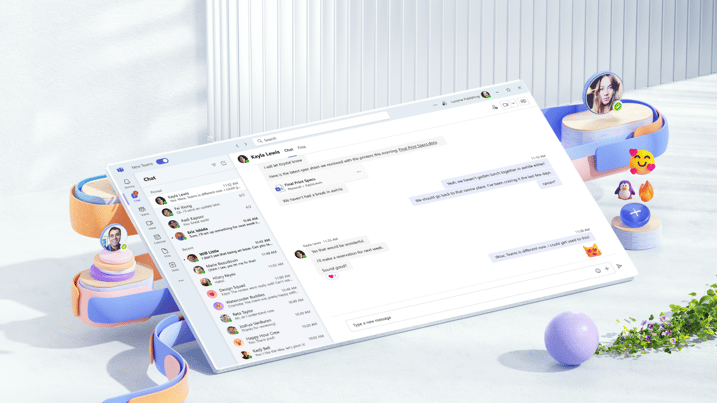 Microsoft Teams Phone extends Microsoft Teams into an enterprise telephony platform.
Alongside meetings, messaging and collaboration, users can make and receive PSTN calls directly from Teams using their business telephone number.
For organisations already using Microsoft 365, that creates an opportunity to bring communications into a platform employees already use every day. It can also allow organisations to replace or progressively migrate away from traditional PBX platforms.
But Teams Phone is only one part of the solution, businesses still need a way to connect Microsoft Teams to the global Public Switched Telephone Network, or PSTN. That is where the connectivity strategy becomes important.
How does Microsoft Teams connect to the PSTN?
There are several ways organisations can connect Microsoft Teams Phone to external telephone networks.
Operator Connect
Microsoft Operator Connect allows organisations to select an approved telecommunications provider and manage telephone numbers alongside Teams.
The service provider manages the underlying PSTN connectivity while Microsoft Teams remains the collaboration and calling environment.
Operator Connect can be particularly attractive for organisations looking for a simple, Microsoft-integrated approach to cloud calling.
Direct Routing
Microsoft Teams Direct Routing connects Teams to a Session Border Controller, or SBC, which then connects to a telecommunications carrier.
Direct Routing offers considerable flexibility and can support more complex enterprise environments, existing carrier relationships, contact centres, analogue services and migration scenarios.
The infrastructure can be operated internally or delivered as a managed service.
Bring Your Own Carrier
For organisations with strategic carrier relationships, existing contracts or particular geographic requirements, a Bring Your Own Carrier approach can provide additional flexibility.
The important point is that modernising Teams telephony does not necessarily mean abandoning every existing investment.
A well-designed strategy should allow organisations to select the most appropriate connectivity model for each requirement while maintaining a consistent management experience.
Is using multiple voice providers really a problem?
Not necessarily.
There are valid reasons for maintaining multiple carriers, platforms or connectivity models. The problem arises when complexity exists without delivering a meaningful business benefit. A fragmented telephony estate can create several hidden challenges.
Does consolidating telephony mean losing control?
This is one of the most common concerns we hear, the answer is no. Consolidation should not mean replacing flexibility with dependency. The objective should be to simplify the operating model while retaining the ability to make appropriate technology and carrier choices.
Microsoft Teams can provide a common user experience and management framework. Underneath that, organisations can still use Operator Connect, Direct Routing, BYOC or a combination of technologies depending on their requirements. The difference is that these services can be brought together within a more consistent global architecture. That distinction is important.
Standardisation does not have to mean limitation.
Building a global Teams voice strategy
At Aura, we believe organisations should be able to adopt Microsoft Teams voice without being forced into a one-size-fits-all telecommunications model.
Aura Connect is designed to provide a common platform for managing the connectivity behind Microsoft Teams. That includes support for Operator Connect, Direct Routing and BYOC services, alongside number management, SBC services, migration and ongoing service management.
The objective is simple:
Rather than forcing an organisation to redesign its entire telecommunications estate overnight, we can help build a transition strategy around its existing environment.
That might mean moving some countries immediately to Operator Connect. Other locations might continue using existing carriers through Direct Routing or BYOC. Legacy PBXs can remain operational during migration. Contact centre platforms and specialist services can be integrated as required. Modernisation becomes a journey rather than a disruptive replacement project.
How can enterprises reduce the risk of migrating to Teams Phone?
Telephony is business critical, so migration needs to be approached differently from a typical software deployment. A global voice transformation does not need to happen through a single big-bang migration. In many organisations, the better approach is phased.
This could involve migrating:
- Individual locations
- Selected countries
- Specific business units
- New users
- Newly acquired companies
- Particular telephony workloads
Legacy and cloud environments can coexist during the transition. The key is having a clearly defined target architecture and migration plan before moving users. That helps prevent organisations simply recreating their existing complexity inside Microsoft Teams.
What about resilience?
Moving towards a global operating model can sometimes create concern about placing too much reliance on a single provider. But resilience should be designed into the architecture rather than achieved through uncontrolled supplier sprawl.
Depending on the requirement, enterprise voice architectures can incorporate:
- Geographic diversity
- Redundant SBC infrastructure
- Multiple connectivity paths
- Multiple carrier relationships
- Resilient cloud infrastructure
- Defined failover models
- Proactive service monitoring
The objective is not simply to have more suppliers. It is to understand exactly how the service behaves when something fails. That is a much stronger measure of resilience.
What are the benefits of consolidating global voice?
Cost savings can certainly be part of the business case, but they are rarely the only reason organisations modernise telephony.
The operational benefits can be considerably more important.
That allows internal IT teams to focus on transformation rather than maintaining increasingly complex voice infrastructure.
What should organisations look for in a global Teams voice provider?
Technology is only part of the decision. Enterprises should also consider how their provider will support them operationally. Questions worth asking include:
-
Can they support multiple Microsoft Teams connectivity models?
Your architecture may require Operator Connect today and Direct Routing or BYOC somewhere else.
-
Can they support your geographic footprint?
Global capability should extend beyond selling telephone numbers. Regulatory requirements, porting, emergency calling and local telecoms processes all matter.
-
Can they support migration from legacy platforms?
Most global businesses cannot move everything at once.
-
Can they provide ongoing management and support?
Moving infrastructure to the cloud does not remove the need for telecommunications expertise.
-
Can they integrate with the rest of your communications environment?
Contact centres, analogue devices, emergency services, paging, recording and legacy systems often remain part of the enterprise communications landscape.
The best Teams voice strategy considers the whole environment.
From global telephony to global communications
The wider opportunity extends beyond replacing traditional telephone systems. Microsoft Teams is increasingly becoming the communications platform through which employees interact with colleagues, customers and partners.
Voice is one component of that environment, as organisations modernise, technologies such as contact centre, AI, automation, analytics and digital customer engagement increasingly become part of the same conversation.
At Aura, our focus is helping organisations connect those technologies rather than treating each one as another standalone platform.
Connect. Transform. Manage.
Connect users, customers, platforms and networks.
Transform legacy communications into modern cloud experiences.
Manage the environment globally so internal teams do not have to.
A simpler approach to global voice
Enterprise telephony does not need to be complicated simply because an organisation operates globally. Microsoft Teams Phone provides organisations with an opportunity to establish a common communications platform while modern connectivity models provide flexibility underneath it.
The key is approaching consolidation in the right way, not removing choice or forcing every country into exactly the same architecture. The idea is not replacing one form of complexity with another. Instead, organisations can create a global communications strategy that combines centralised management with local connectivity, resilience and flexibility.
For many enterprises, that is becoming the real promise of Microsoft Teams Phone. And it is exactly the type of communications environment Aura Connect was designed to support.
Frequently Asked Questions
About the author
Jonathan Harris is Chief Strategy Officer of Aura, a global communications technology company helping organisations connect, transform and manage modern communications environments. Aura works with enterprises and partners to simplify Microsoft Teams voice, cloud communications, customer experience and complex global technology deployments.